
Growing Roots: Sharing the Research Ethics Tree to Support Children and Young People’s Engagement with Research Ethics and Understanding of Informed Consent
Background
During my doctoral research, I experienced a gap between ‘procedural ethics’ and ‘ethics in practice’ – the ethical complexities and dilemmas that arise in the life course of a research project (Skelton, 2008; Beazley et al, 2009; Robson, 2018) – which led me to develop my Research Ethics Tree.
In a nutshell, the Tree is a tool I created to more meaningfully engage children and young people in conversations about research ethics and support the informed and ongoing consent process. It was inspired by Timperley’s ‘Case of Ethics’ (2019) and has become a key output of my doctoral work.
A year ago, my article – The Research Ethics Tree: engaging children and young people with research ethics using an interactive tool – was published in the inaugural issue of the Journal of Creative Research Methods (Robinson, 2025). Since then, the article has become one of the journal’s most read papers with a recent check of the metrics having over 1,200 full text views and over 1,800 PDF downloads.
The Tree has also ‘grown roots’ through being shared and adapted by others for their own practice. Below, I share a brief overview of the Tree, its dissemination and adaptation. In doing so, I hope it encourages readers to take some time to reflect on how they support children and young people’s engagement with research ethics and understanding of informed consent.
A little more about the Tree
I chose to use a tree structure as a metaphor for research ethics. Like a tree, research ethics is complex, and like growth, informed consent is an ongoing process. I designed the Tree to be visual, interactive, and engaging; to give my participants sufficient knowledge and understanding of the research project and to support their informed consent. To make the Tree interactive, I designed the leaves of the Tree (the tokens) to be taken down from their branches and engaged with. The Tree has nine tokens. Each token had a 2D image on it that visually represented a key aspect of my doctoral research.
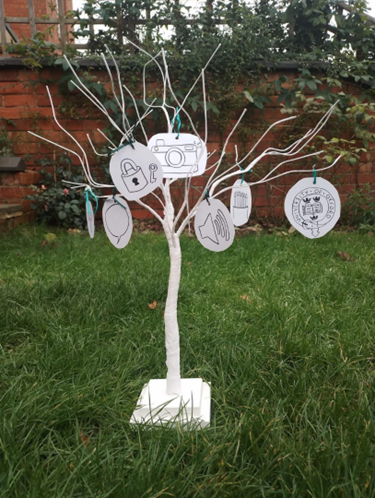
Image 1: Photograph of the Research Ethics Tree
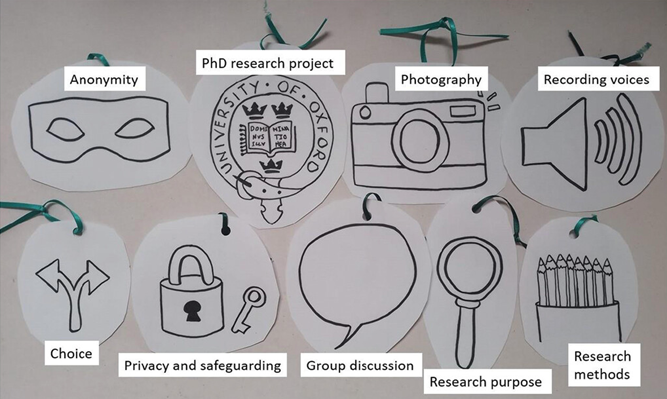
Image 2: Photograph of the nine tokens with labels
At the start of each data generation session, the Tree was set up within the research space and, taking turns, the participants were asked to pick a token down from a branch and explain how they thought it was related to research. For trickier ones, prompts such as ‘What is the purpose of a mask?’ and ‘How might that purpose be linked to research?’ were offered. The Tree remained present in the sessions with every group and led to the children and young people asking questions about the research process and understanding technicalities, allowing for bi-directional information sharing (Alderson & Morrow, 2011) and clarification through questions.
Growing roots
As a key output of my doctoral research, I have been keen to share my Tree. I have been heartened to receive positive feedback about my work and to see it being adapted and developed by others for their own professional practice. Below, I share several examples of how my Tree has ‘grown roots’.
Forces Children Scotland
Forces Children Scotland is a charity that provides “support and opportunities to enable babies, children and young people from Regular, Reservist and Veteran families to realise their potential and thrive” (2026). After sharing my Tree with the charity last year, they have adapted it into their co-production work.
We have been using an adapted version of the Research Ethics Tree, which we call the Consent tree, in our forum group sessions for around six months. We wanted a more effective way to help children and young people understand the work they would be involved in, how their ideas and quotes would be used, and what taking part in a project with Forces Children Scotland would mean. While we already used consent forms, we felt these alone did not give us confidence that children and young people fully understood what they were agreeing to. We explored other approaches, such as adapting a social story, but it didn’t feel like the right fit. Now, at the start of each project, we use the Consent Tree to give children and young people the opportunity to ask questions, explore what participation involves, and make informed decisions about their involvement. It has also given staff greater confidence that consent is genuinely informed.
Nina Collins, Participation Manager, Forces Children Scotland
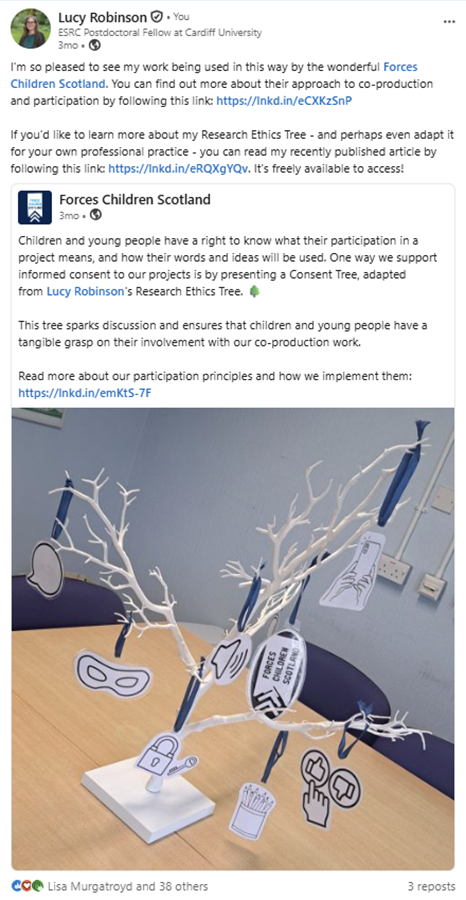
Image 3: Screenshot of a LinkedIn post by Forces Children Scotland about the Tree
SCiP Alliance Impact Centre
The SCiP Alliance Impact Centre has teamed up with Forces Children Scotland and are also using the Tree in their current consultation work.
The SCiP Alliance Impact Centre is currently conducting a large sector consultation. As part of this work, we want to understand how children and young people experience different evaluation methods. As this is a data collection activity, with a consent process, we wanted to find a way to talk about their rights for engaging with the consultation and how their contributions are used. With help from Forces Children Scotland, we presented the Tree with icons relevant to their rights (confidentiality, choice to engage, purpose of the project, etc) to talk through their participation rights. The Tree helped make the ethics briefing engaging and concrete – making it easy to ask and answer questions about the purpose of the task. It made approaching conversations about data and anonymity more accessible to the young people. We will be using this physical framing of rights and participation in our future events with young people too.
Dr Liam Satchell, Director of the Impact Centre, Service Children’s Progression Alliance
Ethical Research Involving Children (ERIC)
Although I had shared my Tree at various conferences prior to publication, the publication triggered a request from Ethical Research Involving Children (ERIC) to have it added to their library of resources. ERIC has a brilliant bank of case studies about research with children, and I recommend looking at their website, including their reflexive tool ‘Getting Started‘.
Image 4: Screenshot of the resource page about the Tree on ERIC
Final thoughts
If you are reading this and thinking that you might wish to use or adapt the Tree for your own work, then I recommend you take a bit of time to read the article (which also talks about other approaches taken by researchers) and to think carefully about your own context. As Mayne, Howitt and Rennie eloquently explain, “the way children relate to ethics information is dependent on culture, context and their perception of free choice; and that the form and content of the ethics information can affect the way children respond” (2016, p.679).
References
Alderson, P. and Morrow, V. (2011) The Ethics of Research with Children and Young People: A Practical Handbook, 2nd edn, SAGE Publications.
Beazley, H., Bessell, S., Ennew, J. and Waterson, R. (2009) The right to be properly researched: research with children in a messy, real world, Children’s Geographies, 7(4): 365–78, doi: 10.1080/14733280903234428
Forces Children Scotland. (2026). Who we are, https://forceschildrenscotland.org.uk/who-we-are/
Mayne, F., Howitt, C. and Rennie, L. (2016) Meaningful informed consent with young children: looking forward through an interactive narrative approach, Early Child Development and Care, 186(5): 673–87, doi: 10.1080/03004430.2015.1051975
Robinson, L. (2025). The Research Ethics Tree: engaging children and young people with research ethics using an interactive tool. Journal of Creative Research Methods, 1(1), 158-166, 10.1332/30502969Y2025D000000006.
Robson, E. (2018) Ethics committees, journal publication and research with children, Children’s Geographies, 16(5): 473–80, doi: 10.1080/14733285.2017.1392481
Skelton, T. (2008) Research with children and young people: exploring the tensions between ethics, competence and participation, Children’s Geographies, 6(1): 21–36, doi: 10.1080/14733280701791876
Timperley, V. (2019) Working more ethically with children and young people – ExChange, https://www.exchangewales.org/how-might-we-work-more-ethically-with-children-and-young-people-the-case-of-ethics/
Dr Lucy Robinson, ESRC Postdoctoral Fellow, Cardiff University